
Quit Crowdsourcing Your Inner Life
July 10, 2026 | By Alvin
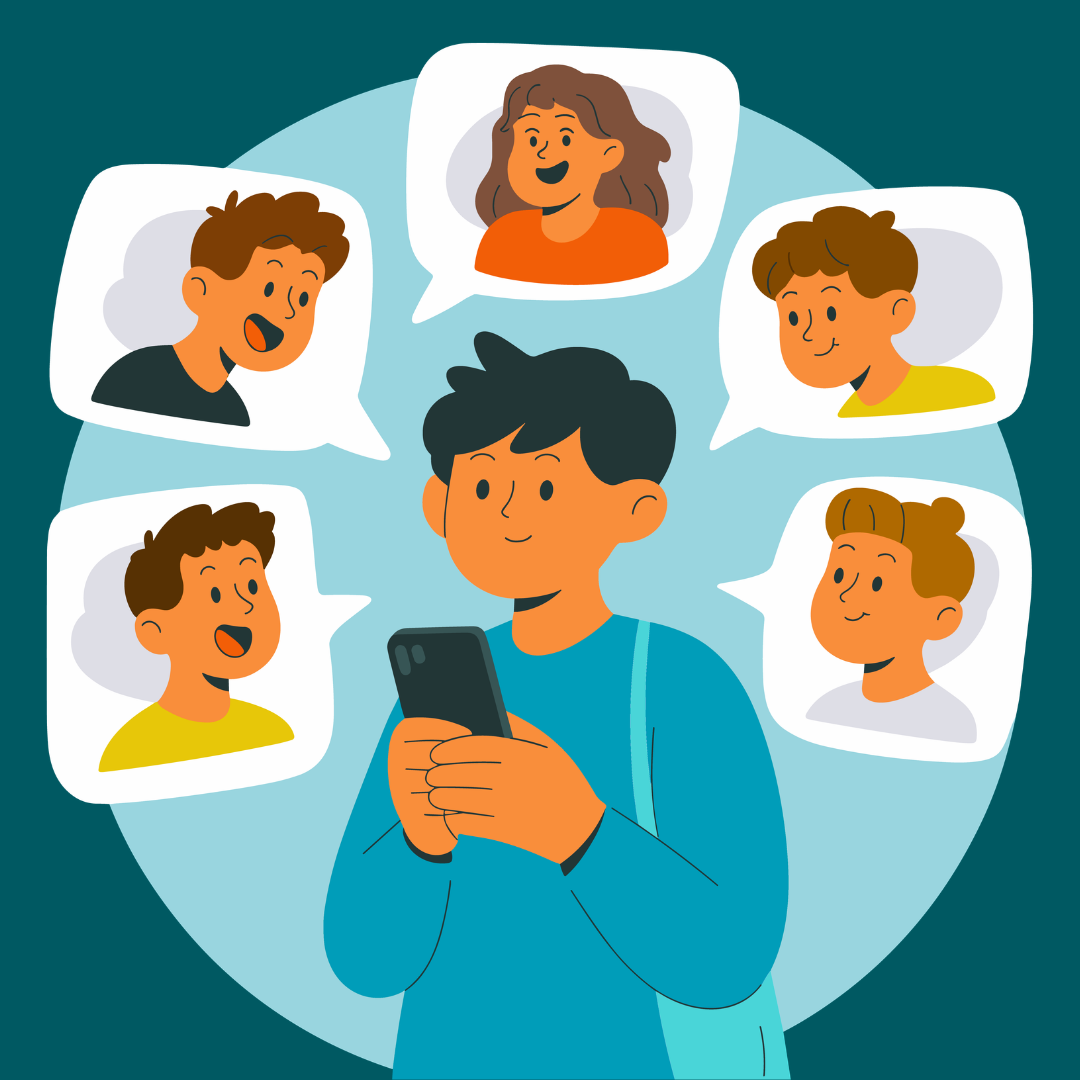
Picture yourself opening Instagram and posting, “is this a valid crash out?” or “am I cooked?” into your Notes, Story, or a Group chat about a situation you haven’t fully processed yet. Within a few minutes, responses online flow in: voting, replying, and judging a situation they don’t even know the full context of. With thousands of online followers, you become one of the last to actually see the answers to the questions you posted. Too often, we hand our own emotions over to the internet to interpret, before we even understand them ourselves.
Modern Shift: Self-Processing to Posting
Somewhere along the way in the development of teens on social media, we have stopped asking ourselves how we feel and started asking the internet to decide for us. Based on recent studies from the American Psychological Association and Pew Research Center, teens spend close to 5 hours on social media daily, with a large majority reporting that social media gives them a place to process their emotions freely. These numbers reveal how deeply social media is woven into daily life, and over time, these platforms have extended beyond just entertainment. When so much of daily life is spent online, it’s natural for teens to use these spaces to express their emotions.

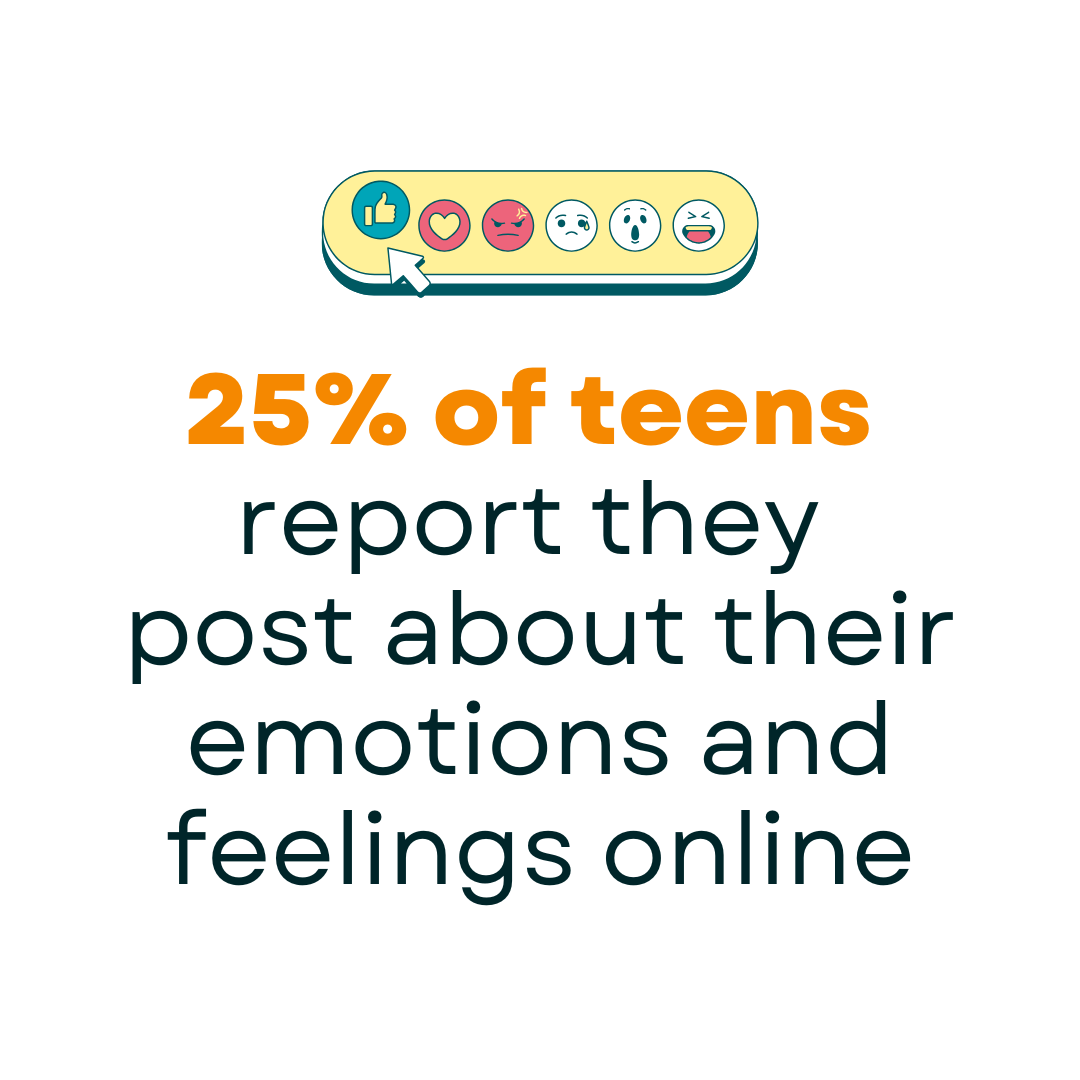
There used to be a natural order to emotions: one would sit with them, understand them, and then choose to share them. However, that script has been flipped, where posting has become the first step and not the last. In fact, this shift is measurable with around 25% of teens reporting they post about their emotions and feelings online(Anderson et al.). These numbers expose how emotional expression fills a quarter of the social space – evidence that social media has become a main source for processing what used to be private.
Instead of asking themselves: “Why do I feel like this?” teens tend to ask the public: “Is this valid?”
Instead of reflecting, polls are posted.
Instead of understanding, they wait for replies.
This shift creates a sense of dependency in which emotional clarity no longer arises from within the person’s thought process, but instead comes from external validation. As validation becomes the basis of self-understanding, their entire process of emotional processing starts to decay.
Why This is a Problem
The issue does not lie in oversharing and expressing emotions, but rather it becomes a habit as a result. When every feeling is immediately posted online, there’s no time to digest. No time to assess whether you’re actually hurt or feeling overwhelmed. It could be frustration, jealousy, or impulse driving the post. Once it’s out on the internet, the emotion becomes
public property. In chasing quick validation, we lose the quiet space where feelings shift into understanding. Yet over time, this habit creates a gap in which individuals are unable to learn to identify their own emotions, and start relying on others to do it for them.
Moreover, the internet does not know anyone’s full situation. Those who respond to a post may not consider the context, history, or intentions. They only see a small snapshot and respond based on their own experiences, biases, or moods. Although some may support, others will criticize. In some situations, online users might even project their own problems onto the situation, creating even larger problems. Nobody's opinion guarantees accurate validation. So now your understanding of your own emotions is being shaped by people who don’t actually know you.
Not only are people likely misunderstood, but the distortion of emotional language plays a large part. Words such as “depressed,” “overstimulated,” “traumatized,” etc., are being used more casually and incorrectly online. If everything is labeled as extreme, it becomes harder to distinguish what’s serious from what’s a temporary emotional perspective. Essentially, as the internet’s language is unclear, so is understanding.
Future Generation Learning Through a Screen
Younger and younger teens are gaining access to social media earlier than ever before. Picture an adolescent who's learning how to process their emotions through observations that include how others react, post, and describe their feelings online instead of their personal experience. That means their understanding of emotions is shaped by certain factors such as trends, algorithms, and public reactions. In truth, social media environments have always included negativity, no matter the content. Even when an individual is genuinely struggling, there’s some form of criticism, hate, and dismissal in response. Not only are people relying on others to interpret their emotions, but they’re also exposing those emotions to environments that can be invalidating. Over time, the normalization of this habit creates confusion of self-identity.
Common Patterns. We see them everyday. ⤵
Scenario 1. A friend realizes they are running low on time to study for a big exam. They hop on Instagram and post a quick Note: “am I cooked?” Within minutes, replies flood the DM’s in:
a few joking “YES”
deliberate unhelpful advice about “just quit now”
What suddenly started as a stressed moment became a crowd-sourced stream of helpful and unhelpful comments.
Scenario 2. Another teenager has a rough day and posts a message on their story saying: “I’m actually depressed.” People jump into their DM’s with sad emojis, empathetic replies, or even threats. Even though what they felt might have been temporary stress or frustration, the internet erupts and treats it as something bigger. A passing emotion begins to feel permanent, as if they must carry a label.
Scenario 3. A classic poll: “Should I drop them/break up with them?” Clearly, a decision that should come from reflection, boundaries, and personal values gets decided by friends, classmates, and random followers tapping a button while bored on the couch.
In every one of these posts, the pattern is the same, where the emotion isn’t fully processed before it is interpreted by everyone else.
Pause Before the Post
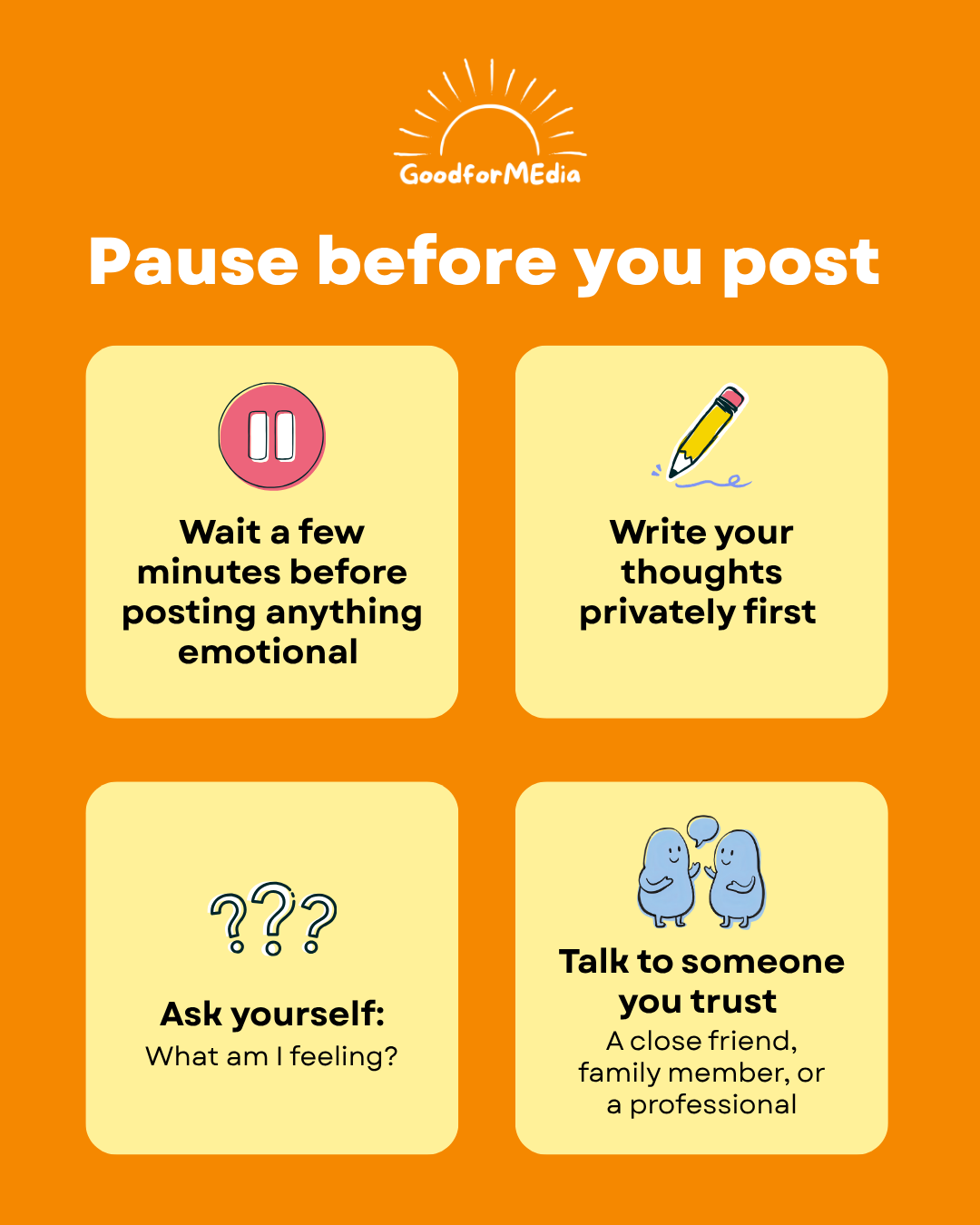
The issue isn't the expression itself; it’s timing. Similar to forgetting to think before speaking, we post before we process. Therefore, a pause is needed before posting. A simple shift can make the most difference.
Wait a few minutes before posting anything emotional
Write your thoughts privately first
Ask yourself: “What am I actually feeling?”
Talk to someone you trust: a close friend, family member, or a professional
Social media should be a place where you express emotions you understand, not where you go to figure them out. Understanding yourself is a skill that can only be developed through practice.
Your emotions are yours before anyone else’s.
Not everything needs a post. Not every feeling needs to be validated by a crowd. And not every moment needs an outside opinion.
If you always ask the internet first, you’ll never learn how to answer truthfully for yourself.
About the author
Alvin (he/him) is a student who is interested in how social media shapes perspectives. Having grown up with social media, he is passionate about bringing diverse viewpoints to light, recognizing that everyone’s experiences are different. Outside of these interests, he stays active by playing on his school’s tennis team and is constantly looking for opportunities to learn something new. He is grateful to be a part of GoodforMEdia as it creates space for honest conversations about what happens behind screens.
Additional Tools and Insights 📚
GoodforMEdia Guides and Tools: Explore additional resources created by youth to help their peers and adult allies navigate the positive and negative aspects of social media.
Sources 🔍
Anderson, Monica, et al. “What Teens Post on Social Media.” Connection, Creativity and Drama: Teen Life on Social Media in 2022: Majorities of Teens Credit Social Media with Strengthening Their Friendships and Providing Support While Also Noting the Emotionally Charged Side of These Platforms, Pew Research Center, 2022, pp. 17–22. JSTOR, http://www.jstor.org/stable/resrep63508.4. Accessed 5 Apr. 2026.
DeAngelis, Tori. “Teens Are Spending Nearly 5 Hours Daily on Social Media. Here Are the Mental Health Outcomes.” American Psychological Association, vol. 55, no. 3, 1 Apr. 2024, www.apa.org/monitor/2024/04/teen-social-use-mental-health.
Faverio, Michelle, et al. “Teens, Social Media and Mental Health.” Pew Research Center, Pew Research Center, 22 Apr. 2025, www.pewresearch.org/internet/2025/04/22/teens-social-media-and-mental-health/.
Share Your Perspective 💬
Have tips, stories, or strategies for healthy social media use? Submit a testimonial to share your perspective and help others navigate online spaces. Learn more and share.