
Scroll-to-Sleep: Why It Happens and How to Break the Habit
March 17, 2026 | By GoodforMEdia Youth Leaders
Scrolling before bed has become a common nighttime habit for young people. What may start as a quick check of notifications or a few videos can easily turn into an hour of doomscrolling, and before you know it, you’re having trouble falling asleep. Our GoodforMEdia Youth Leaders share why this habit happens and offer suggestions for breaking the cycle and creating a better routine that helps you get the Zzzs you need.
Why Do We Scroll-to-Sleep?
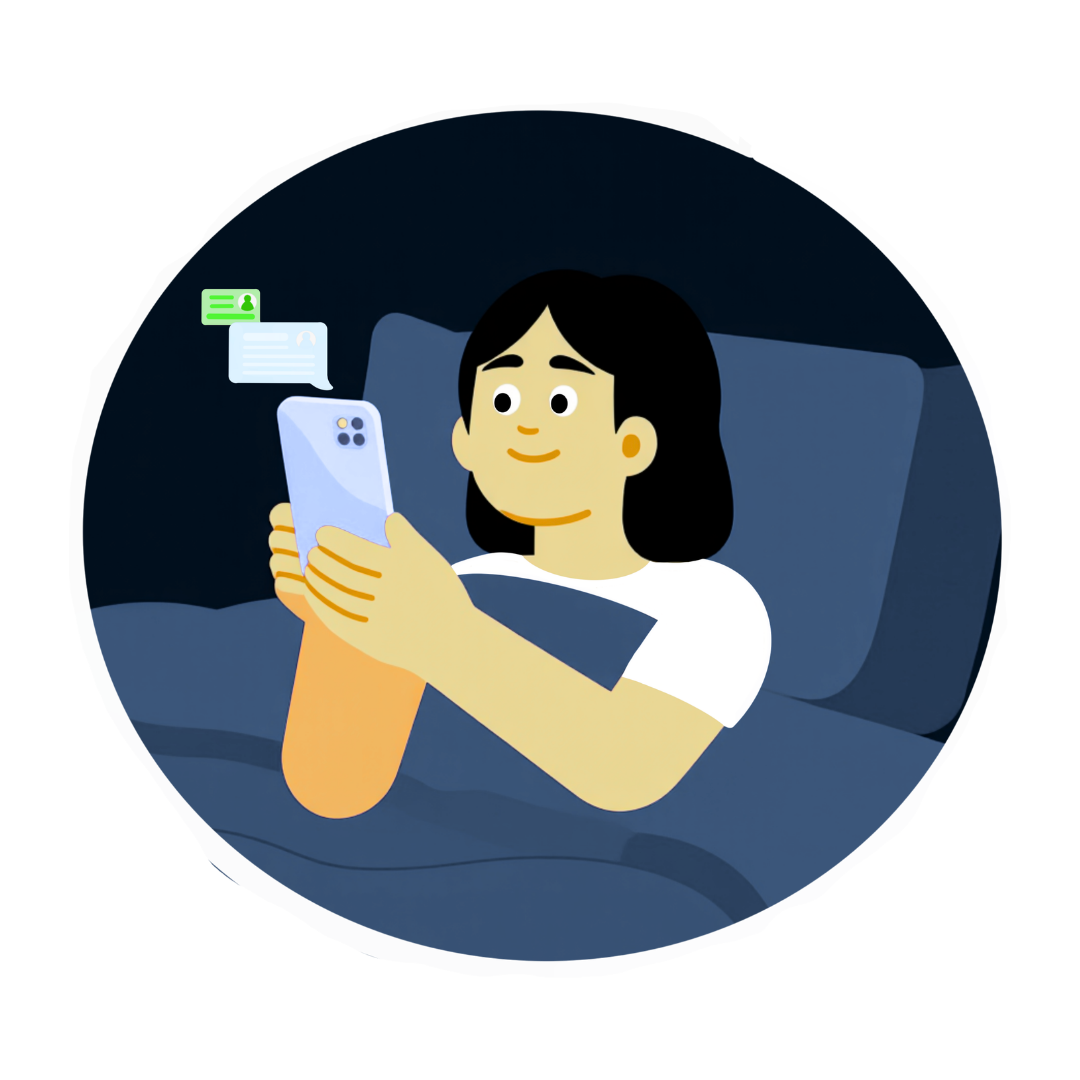
Here’s what GoodforMEdia Youth Leaders have to say:
Feeling stressed and needing a distraction. Sometimes scrolling is a way to take our minds off stress or overwhelming thoughts. It might feel effective at the moment, but it doesn’t actually teach us how to manage stress on our own and can increase our dependency on short-form content.
It becomes part of the nightly routine. For many people, scrolling is simply how they wind down. Once it becomes a habit every night, it can be difficult to break the cycle of doomscrolling.
Social pressure to stay connected. You might see something you want to respond to, or worry you’re missing out if you stop scrolling. Even when you’re tired, your brain can feel like it needs to stay connected.
Sometimes it's just a way to wind down. After a long or stressful day, scrolling can feel like an easy way to take your mind off things.
Revenge procrastination. When people feel like they didn’t have enough personal time during the day, they sometimes make up for it late at night by scrolling.
Trying to reclaim personal time. Many teens spend hours scrolling before bed because it feels like an escape from a day that might feel repetitive, unfulfilling, or overly scheduled. Since school can dominate daily routines and create pressure to constantly be productive, social media scrolling can feel like a way to take control of personal time.
““For me personally, I catch myself doing this after a long and busy day so I can catch up with friends or just purely stay updated. However, this quick 10 minute catch-up can sometime lead to a doom scrolling session””
What to Watch Out For
Small habits around bedtime scrolling can have a bigger impact than we realize.
Keeping your phone on your nightstand can make it much easier to start and end your day on your phone. Having it within reach at night can make it harder to resist checking notifications or scrolling when you wake up.
Your brain can also stay activated from constant new input right before bed, when it should be winding down. The dopamine loop from short-form content can keep you chasing the next video because there is always something potentially interesting. Since the feed is infinite, there is never a natural stopping point that signals to your brain that it’s time to stop.
Tips to Shake the Scroll-to-Sleep Habit
#1 Practice awareness
Awareness is a great first step in changing habits.
Identify what triggers you to reach for your phone before bed and try to find a healthier alternative.
Recognize that the feed is infinite so there's never a natural stopping point that tells your brain it's done
Understand that if you always rely on social media to calm down before bed, you lose opportunities to develop coping skills that don’t involve technology.
#2 Create physical distance
Changing where your phone is located can make a big difference.
Charge your phone somewhere other than next to your bed.
Use an alarm clock so you don’t need to rely on your phone to wake up.
Keep your phone on “Do Not Disturb” and out of reach so you’re less tempted to check it if you wake up during the night.
#3 Use tech tools mindfully
Your phone also has tools that can help you set boundaries with scrolling.
Set up sleep hours and time limits for apps.
Use screen time limits or timers to avoid endless scrolling. Even a simple timer can help you be more mindful.
Try greyscale settings or a red light screen protector to make screens less stimulating.
Set a “scroll time” timer, enjoy that time on your phone guilt-free, and then commit to putting it away.
#4 Build a new wind-down routine
Replacing scrolling with other activities can help your brain relax before bed.
Replace your scrolling with something calming, like listening to a specific music playlist or watching a show you’ve already seen so your brain isn’t processing something new.
Create a routine that helps you wind down without scrolling, such as journaling, reading, drawing, or listening to music.
Consider other relaxing activities you could add to your bedtime routine, like chatting with friends or family.
#5 Start small and build gradually
Changing habits doesn’t have to happen all at once.
Going from scrolling every night to not using your phone at all before bed can be difficult. Start with smaller goals, like limiting your phone use to 15 minutes.
Slowly reduce the amount of time you spend on your phone before bed.
Keep your overall habits in moderation — it doesn’t have to be perfect every night.
#6 Be intentional about connection
Not all phone use is the same. Make the distinction between mindless scrolling and connecting with others.
Be mindful that algorithm-driven feeds can lead to doomscrolling, while talking with friends and family is often more intentional.
At the end of the day, people are finally free to connect after long schedules–just try to keep it from turning into endless scrolling
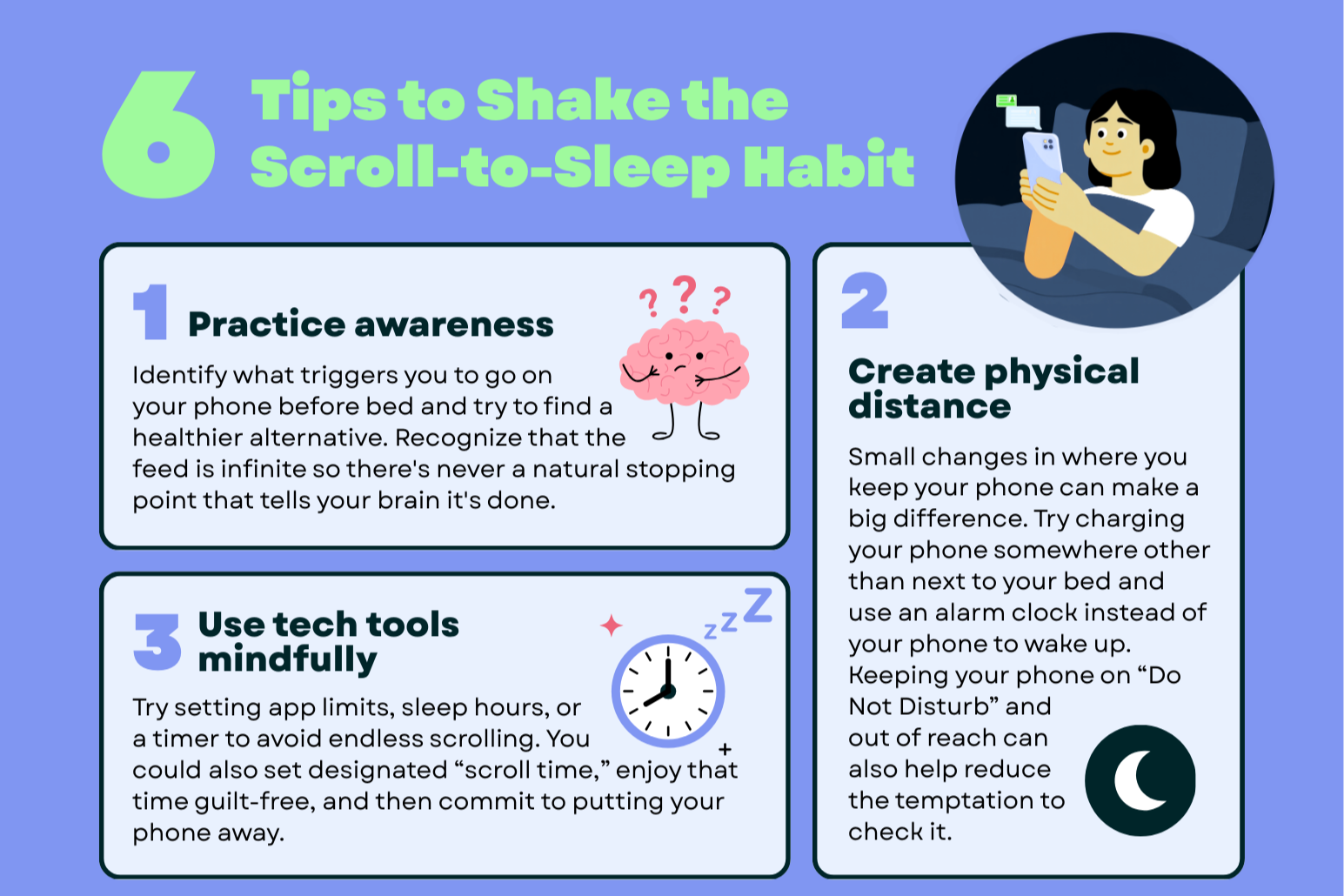
Want a quick reference for these tips?
Download our Scroll-to-Sleep Tip Sheet for quick strategies to build healthier nighttime habits.
Additional Tools and Insights 📚
GoodforMEdia Guides and Tools: Explore additional resources created by youth to help their peers and adult allies navigate the positive and negative aspects of social media.
Share Your Perspective 💬
Have tips, stories, or strategies for healthy social media use? Submit a testimonial to share your perspective and help others navigate online spaces. Learn more and share.